
Wood County Property Value Types
A Wood County parcel record holds several distinct figures. Assessed values appear for land and improvements, plus a total, a class and sale history. State equalized value is a separate estimate for the whole taxation district. Each recorded sale price belongs to one transaction. So comparing any of these figures demands the same parcel, year, class and purpose.
| Value | What It Is | Where |
|---|---|---|
| Assessed value | Local value used to allocate the tax levy | Wood County tax parcel roll |
| Equalized value | DOR market-value estimate by class for a taxation district | Wisconsin DOR annual reports |
| Sale price | Price for one recorded transaction when disclosed | Deed or transfer record |
| Land and improvements | Separate components of the assessed total | Wood County tax parcel roll |
The assessment ratio is simple math. It divides assessed value by current market value. DOR's municipality aggregate ratios compare locally assessed value with non-manufacturing base equalized value across a district. Wood County has no single ratio. Use the ratio for the relevant municipality and class, and remember that a sale price is a clue to one transfer rather than an automatic update to the assessment.
Finding a Wood County Assessed Value
Start with the county Public Portal. Find the parcel and note the assessment year, property class and the separate land, improvement and total fields. Keep the legal description beside the parcel number. The county's tax portal is a convenience service, so ask the Treasurer for certified information whenever the value supports a formal matter.
- Open the county Public Portal through Guest Sign In and locate the parcel by site address or PIN.
- Record assessment year, classification, land value, improvement value and total.
- Use the DOR report for the parcel's municipality and taxation district ratio context.
- Check the recorded transfer for a disclosed sale price and its date.
- Assessed value
- The local roll value used to distribute the tax levy.
- Equalized value
- DOR's estimate of market value by class at the district level.
- Assessment ratio
- Assessed value divided by current market value.
- Sale price
- The consideration reported for a particular property transfer.
- Revaluation
- A local assessment that sets property to market value as of January 1.
What Wood County Assessed Value Is Not
An assessed value is a taxation figure. It is not a sale price. Nor is it a parcel-specific appraisal for a purchase or loan. A recent transaction can help put the assessment in context, yet the two figures rest on different dates, methods and purposes.
Value is not price. A Wood County assessed value supports taxation and is not a sales appraisal. Obtain an appropriate appraisal when a parcel-specific market opinion is needed.
Wood County's January 1 Value Date
January 1 is Wisconsin's valuation date. A revaluation estimates market value as of that day. That is why an assessment can differ from a sale later in the year or from a present-day asking price. The year on the tax roll matters. Revaluation schedules vary by municipality. No countywide revaluation cycle applies to every Wood County municipality, so confirm the local assessor's schedule before comparing a parcel across years. The tax card supplies the parcel fields, while DOR reports add district-level context.
Wood County Municipality Ratios
DOR publishes aggregate-ratio reports each year. They compare local assessed values with non-manufacturing base equalized value for each municipality in Wood County. The report is not an appraisal of one property. It checks broad alignment. Read the report year, municipality and class before applying the comparison, and use Wisconsin DOR's aggregate-ratio table for the annual municipal figures.
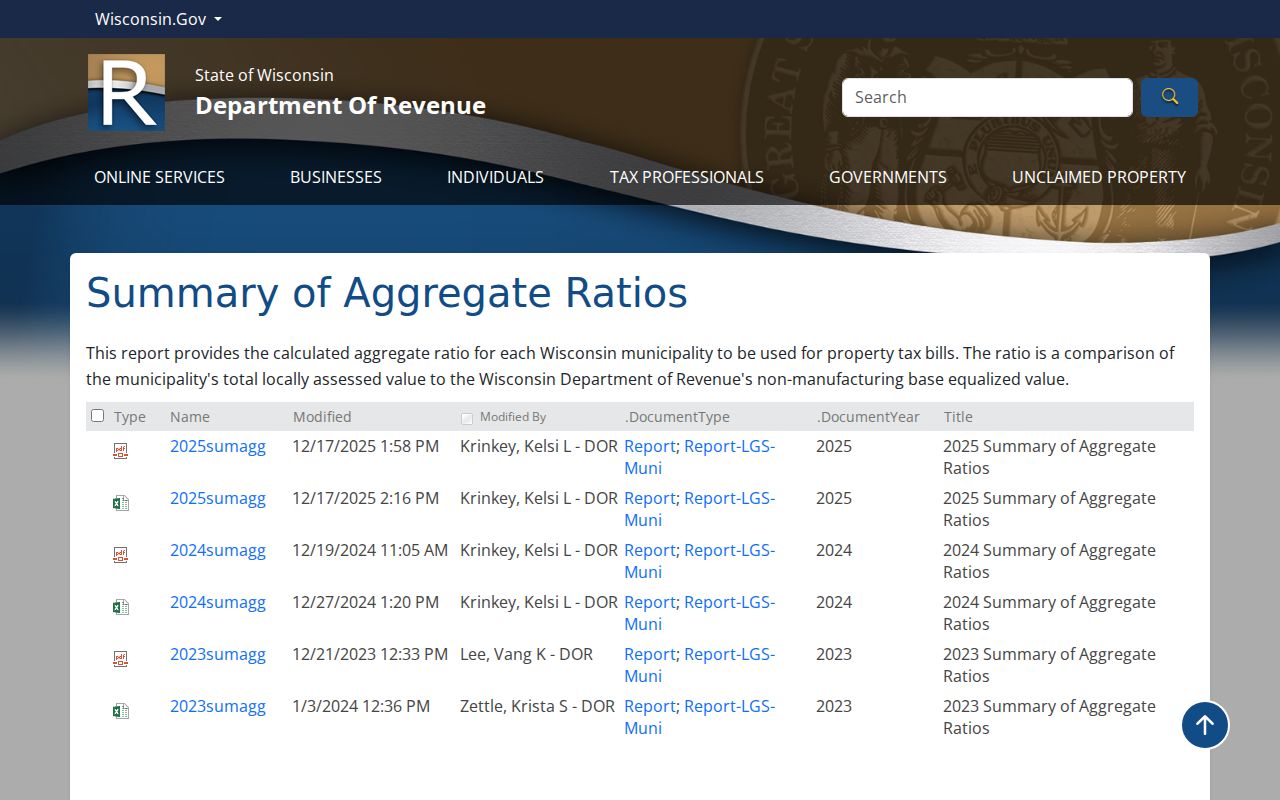
Let Wood County ratios frame questions, not replace assessments.
Wood County Sale Price and Assessment
A recorded sale price describes one transfer. It is useful context. Yet it does not automatically set the next assessment or describe what the parcel is worth today. Check the sale date, legal description and parties in the deed index. A partial-interest or different-lot transaction should never be compared as a whole-parcel sale.
Wood County's GIS includes a recently sold parcel layer. The tax inventory adds land-sale and deed-transfer references. Those are discovery tools. For the underlying deed facts, go to the recorded transfer instrument, and for bill amounts, special charges and tax treatment, continue with Wood County property tax records.
Wood County Land and Improvement Values
The parcel inventory splits value three ways. Land, improvements and a total each get their own field, showing how the roll divides a site from its buildings or other improvements. It is still an assessment field. It is not an independent building appraisal. Nor is it a current replacement-cost estimate. Wood County spans urban lots, agricultural land, woodland, river-edge parcels and industrial or utility property, so a broad county average can blur very different uses. Compare similar classes and taxation districts, and keep the class and legal description as part of the comparison.
Wood County Agricultural Value Context
Wisconsin farms are valued by use. That can make the assessed field behave differently from a nearby residential parcel or a recorded sale. Check class first. Statutory class and land use should be verified before comparing numbers across farms, homes and mixed parcels. A classification change affects how an assessment is read. Sale price and assessed value still differ. Review the parcel's class and contact its assessor if the roll does not match the property's use.
Wood County Property Value Records
Three offices hold the pieces of a Wood County value question. The Public Portal carries the tax parcel's assessed fields. The Register of Deeds keeps recorded conveyances and any disclosed consideration. DOR reports add the municipality ratio for context. Each answers a different part. So keep the year and legal description handy when you compare them across Wood County property records.
Treat the county's public tax data as uncertified. For certified parcel information, ask the Treasurer. For an official copy of a recorded instrument, ask the Register of Deeds. The county-wide property search route is laid out on Wood County's search page.
For assessed fields on a parcel, start at the Wood County Public Portal. For a recorded deed or its official reference, take the Register of Deeds land-record route. Match the legal description before weighing any values.